Categories
Where the product sits in your catalog
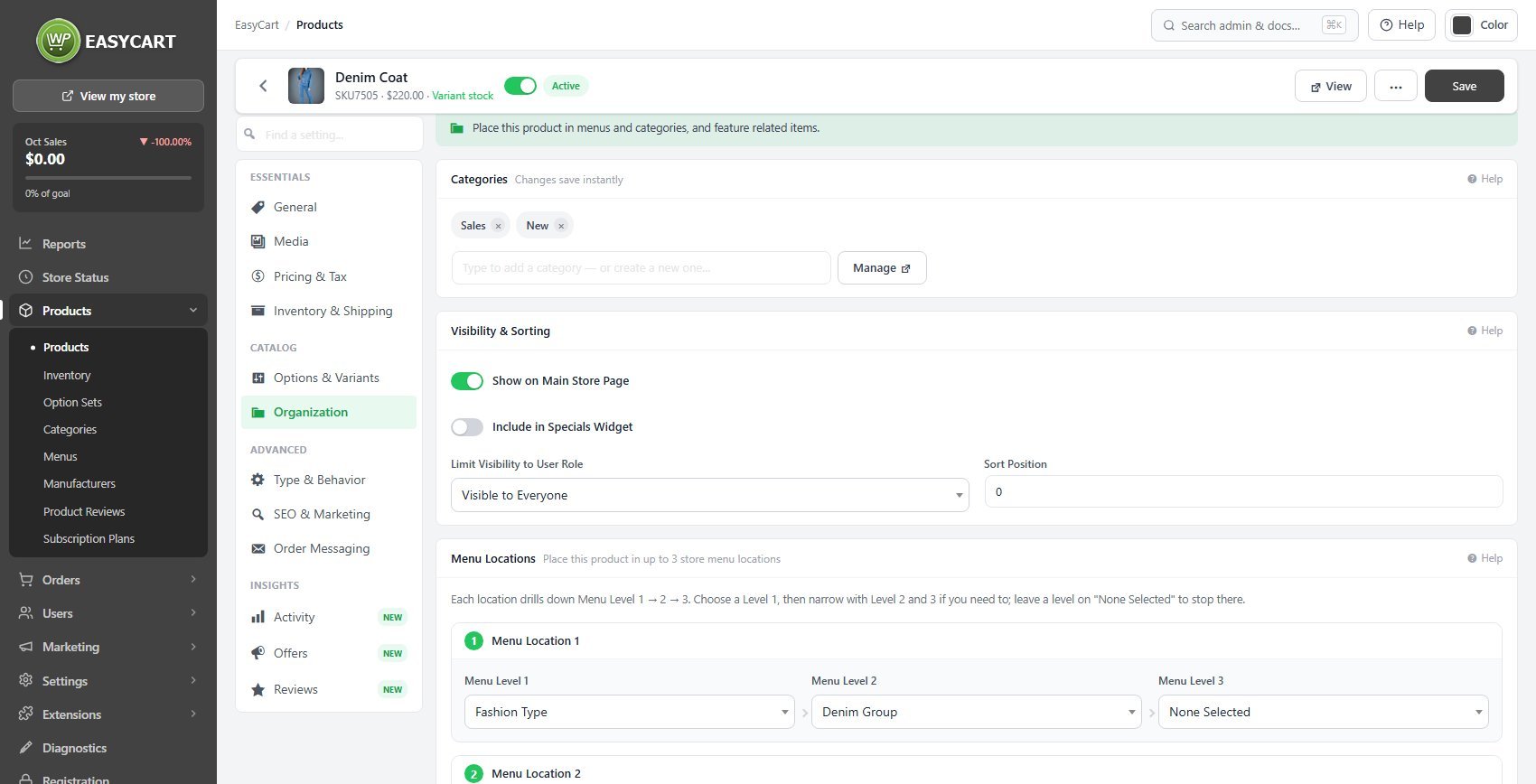
no stored settingsA product can belong to several categories. Type to add one, or to create a new category on the spot, and click a chip’s cross to remove it. Manage opens the Categories screen. Changes on this card save instantly, without the Save button.
Being in more than one category is normal and useful: a product can be both a gift idea and a kitchen item. Bear in mind that categories built from smart rules fill themselves, so a product that matches a rule joins on its own.
The manufacturer, which used to sit here, is now on the General tab next to the title.

Visibility and sorting
The store page, the specials widget, a user role and the sort order
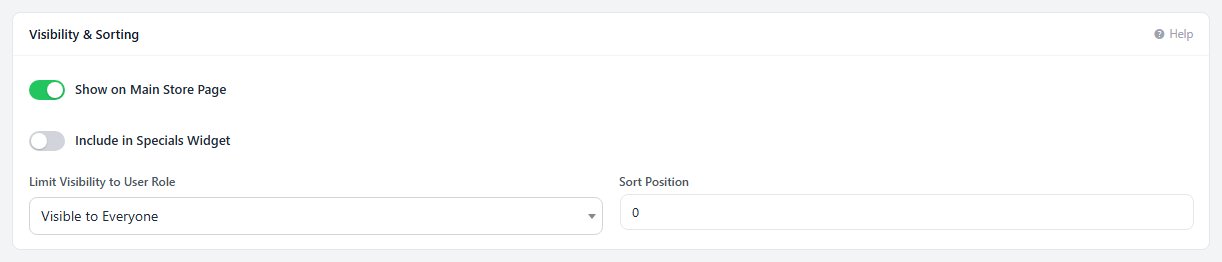
no stored settingsShow on Main Store Page lists the product on the main store page, and Include in Specials Widget adds it to the specials widget. Limit Visibility to User Role ( PRO ) shows the product only to customers in one user role, which is how trade-only or member-only products are kept out of public view; the editor header then carries a Role restricted marker.
Sort Position decides where the product falls in listings when shoppers use the default order. It is the lever for putting your best sellers first without reorganizing categories.
Menus and featured products
Hand-placed menu positions, and related products on its page
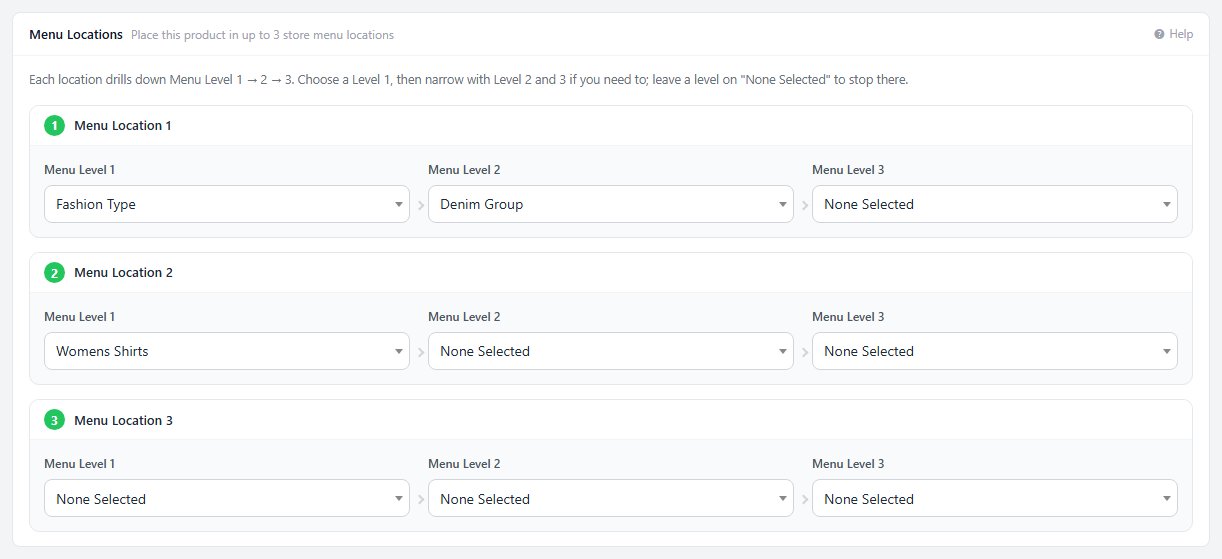
no stored settingsMenu Locations places the product in up to three store menu locations. Each location drills down from Menu Level 1 to Level 2 and Level 3; leave a level on None Selected to stop there. Unlike smart categories, menus do not fill themselves, so this is where you put a product into a seasonal or promotional route through the store.
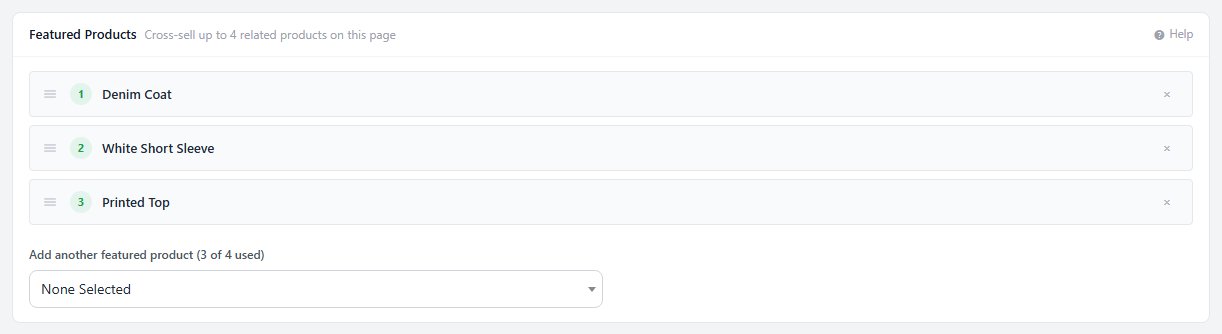
Featured Products cross-sells up to four related products on this product’s page. Drag them into order and add another until all four are used.
Neither will maintain itself. A product placed in a holiday menu stays there until somebody removes it, which is worth a calendar note rather than a discovery in February.
Ready to run your store on WP EasyCart?
Everything in this guide works with the free plugin. PRO and Premium add subscriptions, memberships, wholesale pricing and more. Try every PRO feature free for 14 days.