
Integration Guide
WP EasyCart × Google Analytics 4
Track ecommerce performance in Google Analytics 4 with WP EasyCart. Your store sends the shopping journey — product views, carts, checkout steps and purchases with their items and revenue — to GA4, so you can see what’s actually driving sales. Works with GA4 directly or through Google Tag Manager.
What This Integration Does
With your GA4 measurement ID saved, WP EasyCart loads the Google tag on your store pages and sends GA4’s ecommerce events: view item list, view item, add to cart, remove from cart, view cart, begin checkout, shipping and payment info, and purchase with the order number, total, tax, shipping and every item. It is a Pro feature. For the rest of your site, such as your blog, many stores also use Google Site Kit.
Step 1 — Optional: Site Kit for the Rest of Your Site
Site Kit can add analytics to the pages outside your store and verifies your site ownership with Google.
Set Up Site Kit First
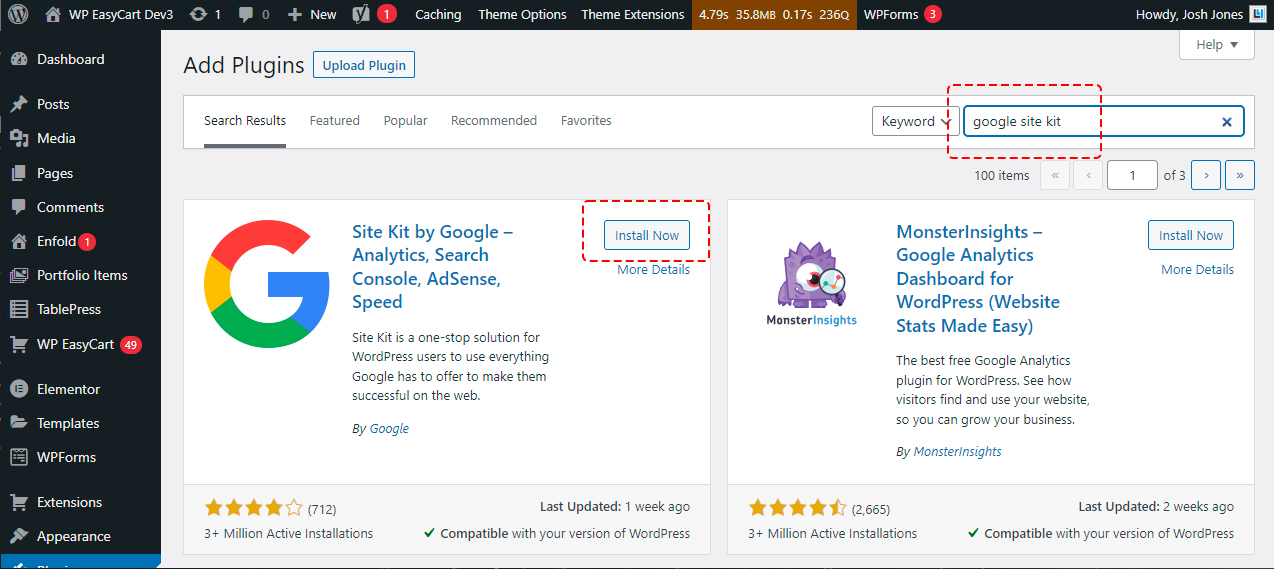
In WordPress, install and activate the Google Site Kit plugin from the plugins directory. Walk through Site Kit’s setup wizard — it’ll connect to your Google account, verify site ownership, and start collecting page-view data. Site Kit also adds a dashboard widget so you see traffic stats right in WordPress. Skip this step if you only want your store measured.
Google Site Kit — WordPress Plugin
Step 2 — Find Your GA4 Measurement ID
Get the Google Tag ID that uniquely identifies your GA4 property — EasyCart needs this to send transactions to the right account.
Locate Your Tag ID
In Google Analytics open Admin › Data streams and pick your web stream. Its measurement ID starts with G- (example: G-WPGKSK5555). Copy it. If Site Kit is connected, it shows the same ID under Site Kit › Settings › Analytics. WP EasyCart always needs the G- ID, also when events go through Google Tag Manager.
Step 3 — Paste the Tag ID into EasyCart
Drop your GA4 measurement ID into EasyCart and ecommerce events start flowing.
Enter the Tag & Save
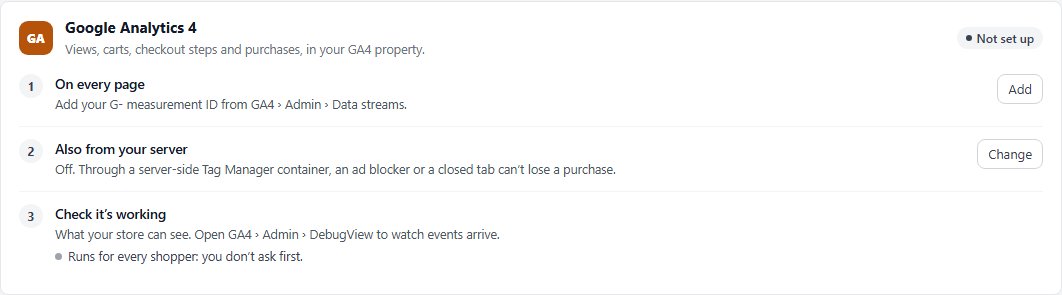
In WordPress, go to EasyCart › Settings › Marketing › Analytics & ads. On the Google Analytics 4 card, step 1 On every page has Add: paste your ID into GA4 measurement ID. If your Google Tag Manager container already loads GA4, turn on Send events through Google Tag Manager in the same box. Step 2, Also from your server, sends the events from your server through a server-side Tag Manager container too, so an ad blocker can’t lose a purchase. If your store asks shoppers before tracking ( the first card on the page ), GA4 waits for their yes.
What You’ll See in GA4
Reports You Can Now Build
With the ecommerce events flowing, you get the full ecommerce reporting suite inside GA4. A few of the most useful reports:
- Acquisition reports — see which traffic sources convert into actual revenue, not just clicks
- Page Value — identify pages that drive purchases vs pages that don’t, by attributing revenue to each page in the user’s path
- Product performance — top sellers, average price, average quantity, total sold over time
- Order trends — order counts and revenue totals across any date range, with comparisons across periods
Deprecated
Older Universal Analytics
Google has fully retired the older Universal Analytics system in favor of GA4. If an old UA- ID is still saved in EasyCart, the Google Analytics 4 card says so with Remove it: Google stopped processing Universal Analytics data in 2024, so its tag loads for nothing. Use the GA4 measurement ID instead — it’s the only path that still works.
Measure What Actually Drives Sales
Combine WP EasyCart with Google Analytics 4 to see which traffic sources, pages, and products actually convert — then double down on what works.