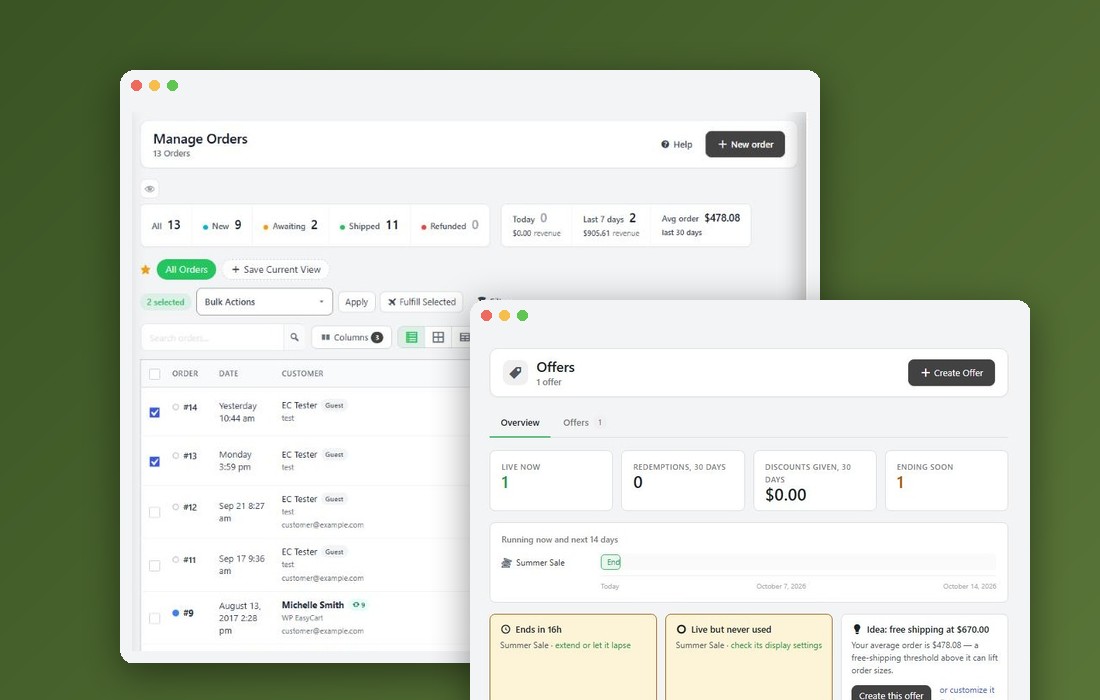
Shipping method
Whether you charge shipping and how rates are worked out
2 settingsCharge shipping at checkout
The master switch. Off means no shipping address is collected, no rate is charged, and every order is treated as not shipped, which is right for a store selling only downloads, services or collection. Everything else on this page depends on it being on.
How rates are calculated
Which system works out the rate: flat rates, by cart total, by weight, by quantity, a percentage of the total, live carrier rates, or Fraktjakt. You pick the system here and build its table on the Shipping rates page. Only the chosen method’s table is used, so a store with rates entered under two methods is not combining them, it is ignoring one. Live carrier rates and Fraktjakt need a PRO or Premium licence.
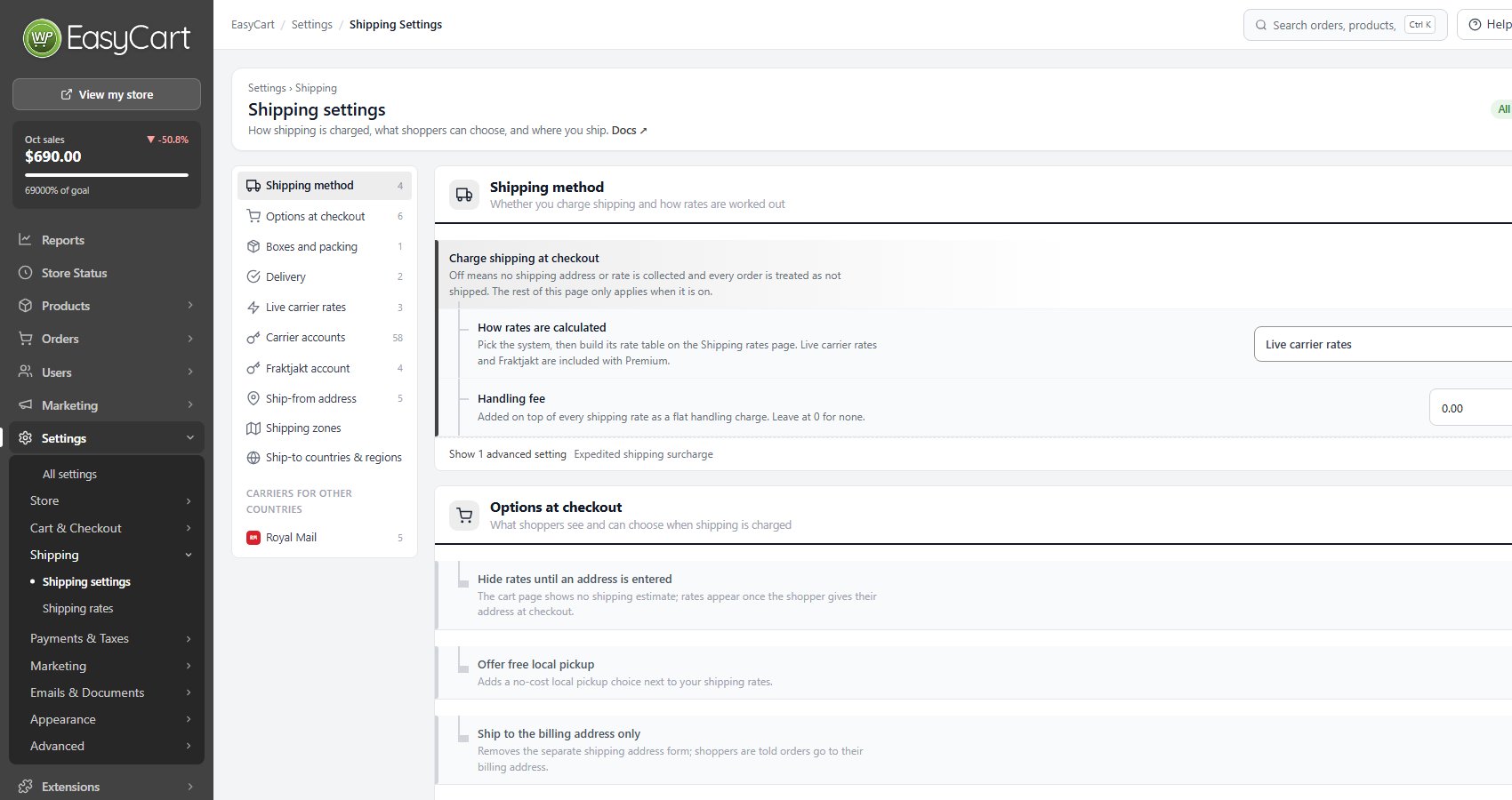
Boxes and packing
The boxes you ship in. Orders are split into packages from them, and a label is bought for each package.
1 settingPack new orders into boxes
Splits each new order into packages from your boxes the moment it is placed, so the order screen already shows what goes in which box and a label can be bought for each package. Orders placed before it was on are packed the first time you open them. Leave it on unless you never ship more than one parcel and never buy labels from the order screen.
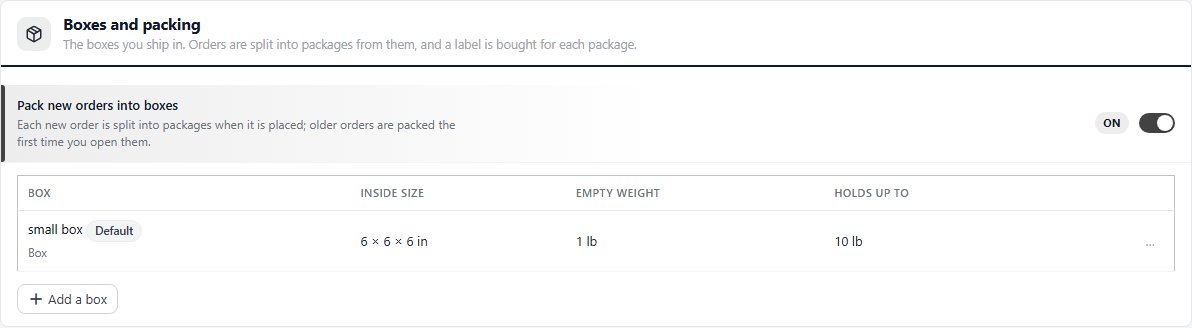
Delivery
What happens when tracking says an order arrived
2 settingsMark orders delivered from tracking
When a label service reports that every package on a paid order has arrived, the order moves to the Delivered status below on its own. That keeps the orders list honest about what is still in transit without anyone checking tracking by hand. Off, orders stay as shipped until you mark them delivered yourself from the order screen.
Delivered status
The status a delivered order moves to. A store without one gets an Order Delivered status made for it. Rename it or change its colour under Order statuses, rather than picking a status that means something else.
Carrier accounts
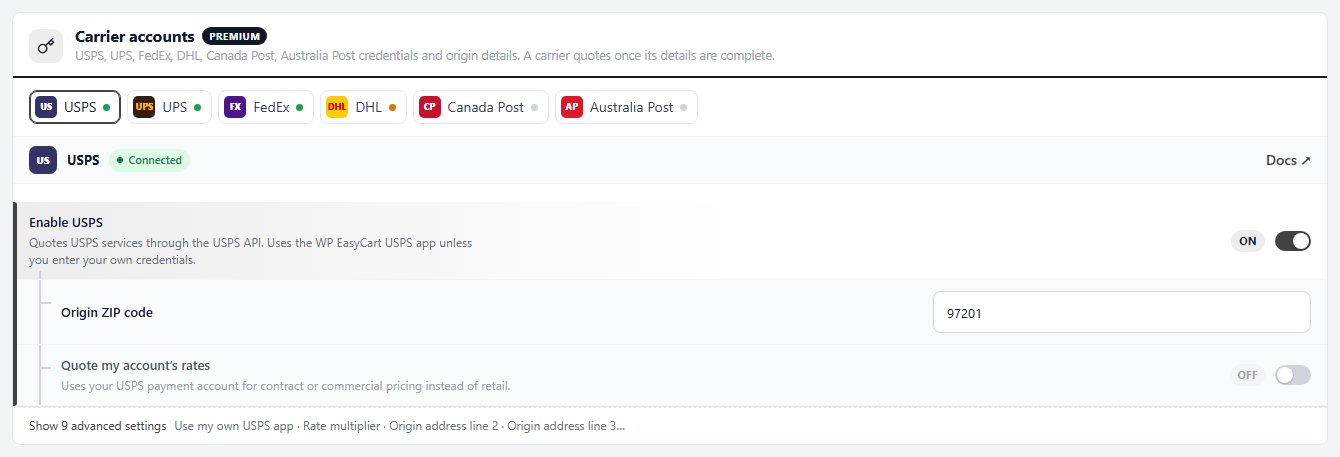
USPS, UPS, FedEx, DHL, Canada Post and Australia Post credentials and origin details. A carrier quotes once its details are complete.
no stored settingsNo stored settings in the usual sense: this is where carrier accounts are entered. USPS, UPS, FedEx, DHL, Canada Post and Australia Post each take their own credentials and origin details, and a carrier only starts quoting once its details are complete. Each carrier has a tab with a dot for its state, and the panel lists what is still missing. Entering credentials here does nothing on its own unless the shipping method is set to live carrier rates.
The tabs follow your store country, set in Settings › Store details: your own postal service comes first, then the carriers that quote anywhere ( UPS, FedEx and DHL for a store in the US or Canada, DHL first elsewhere ), then the postal services of other countries. USPS, Canada Post and Australia Post only quote for stores in their own country, so for a store elsewhere their tab says which country it is for. The same goes further down the page: Royal Mail, for UK stores, and Fraktjakt with its ship-from address, for Swedish stores, sit under Carriers for other countries at the foot of the section list when your store is based elsewhere, unless you already use them.
DHL quotes through the MyDHL API, DHL’s current connection: set Connection to MyDHL API, then add the API key and API secret from the MyDHL API access DHL gives your account on developer.dhl.com, with your DHL Express account number and origin city. A store set up on the older XML Services keeps its Site ID quoting until it switches, and the panel explains how to request MyDHL API access.
FedEx’s panel carries Use FedEx account discounts, on by default, which quotes your negotiated rates rather than list rates. If you have an account with agreed pricing, turning it off means quoting shoppers more than shipping actually costs you.
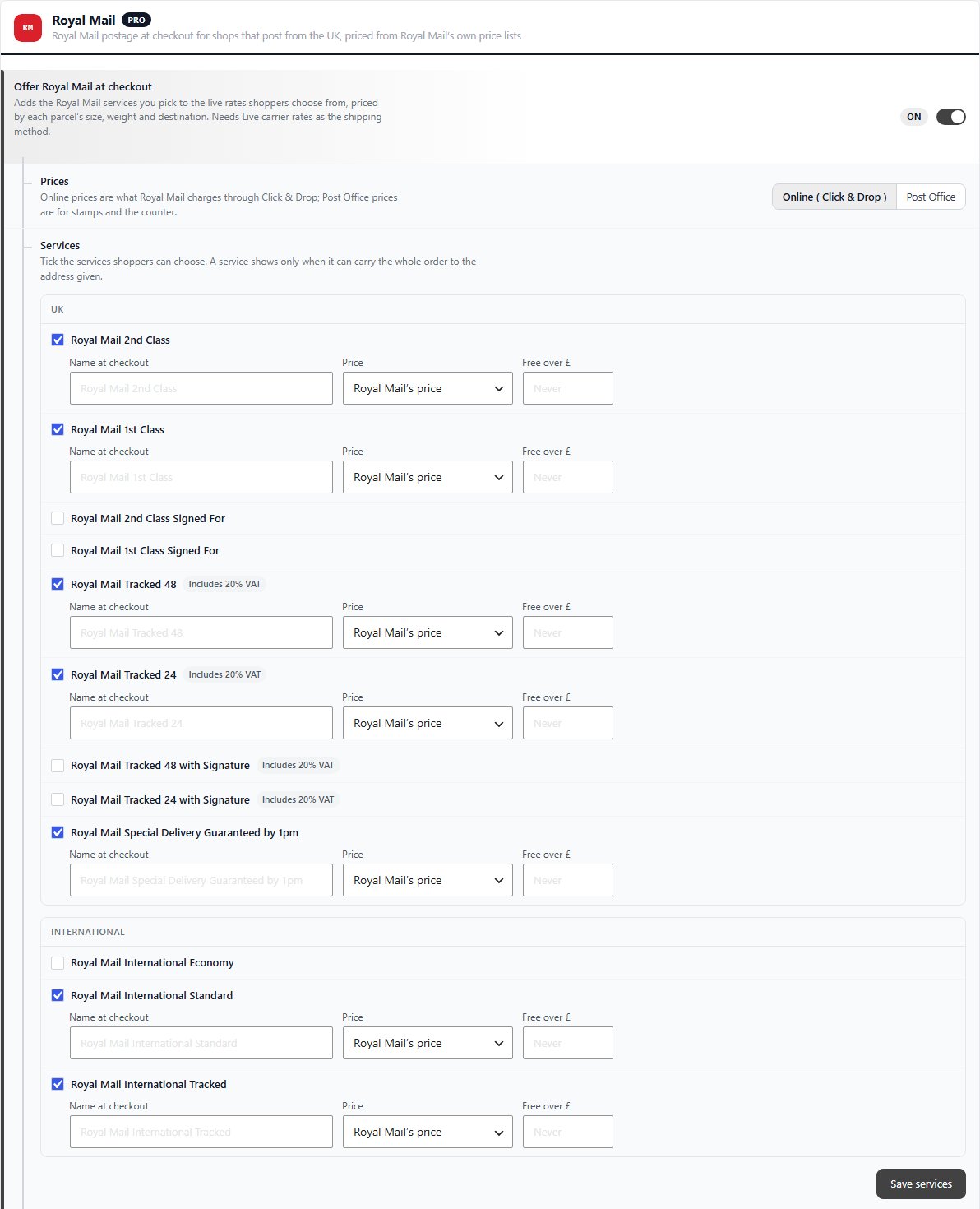
Royal Mail
Royal Mail postage at checkout for shops that post from the UK, priced from Royal Mail’s own price lists
5 settingsOffer Royal Mail at checkout
Adds the Royal Mail services you tick to the live rates shoppers choose from, priced by each parcel’s size, weight and destination from Royal Mail’s own price lists. It needs Live carrier rates as the shipping method and pounds sterling as the store currency; until both are true, the section lists what is stopping it. Below the switch, Services lists 1st and 2nd Class, Signed For, Tracked 24 and 48 ( with or without a signature ), Special Delivery Guaranteed by 1pm and International Standard, Tracked and Economy. Tick the ones shoppers can choose, give each a Name at checkout, and charge Royal Mail’s price, that price changed by a percentage and an amount, or a fixed price, with an optional Free over amount. Save services keeps them. Try a parcel shows what each service charges for a weight, size and destination before shoppers see it. The full setup is in Royal Mail Shipping Rates.
Prices
Which Royal Mail prices to charge: Online prices are what Royal Mail charges through Click & Drop, Post Office prices are for stamps and the counter. Royal Mail changes its prices in April and October; the new prices reach your store before their date and take over on the day, without an update.
Size for products without measurements
Royal Mail prices by size: Large Letter, Small Parcel or Medium Parcel. A product with no length, width and height is sent at least this size, so measure your products for the most accurate price.
VAT in Tracked prices
Royal Mail’s Tracked prices include 20% VAT. Leave it out when your tax settings add VAT to shipping, so shoppers are not charged it twice.
Add the collection charge
Adds Royal Mail’s charge for collecting parcels from you to each parcel. Leave it off if you drop parcels at a Post Office or pay for collection another way.
Ready to run your store on WP EasyCart?
Everything in this guide works with the free plugin. PRO and Premium add subscriptions, memberships, wholesale pricing and more. Try every PRO feature free for 14 days.