
Navigation

Admin panels › Product details

SEO & Marketing

How the product is found, how it appears in search results, and the marketing hooks attached to it. 2 parts.

Search result previewYoast fields in placeMerchant feed and QR code

Before you start

Where it lives, and how the panel works

From your WordPress dashboard open EasyCart › Products, open a product, then choose SEO.

WP Admin EasyCart Products open a product SEO

Search instead of hunting

The search box at the top of the page filters it as you type, and it matches hidden keywords as well as names. The same box on the Settings home searches every panel at once.

Jump between sections

A section list sits beside the page and follows you down it, so you can move straight to the part you came for without scrolling through everything between.

Advanced settings are folded away

Each section hides its rarely-changed settings behind a Show N advanced settings link, naming the first few so you know whether it is worth opening. 0 of the 0 settings on this page start folded.

Dependent settings appear as needed

Settings shown indented here only exist once the setting above them is switched on. Sections of the editor reveal their fields as you switch a feature on, and hide them again when you switch it off.

Saving

Switches and dropdowns save the moment you change them. Anything you type collects in a save bar at the foot of the page that counts your unsaved changes and warns you before you navigate away.

Locked settings

Rows marked with a padlock need WP EasyCart PRO or Premium. They stay visible so you can see what the upgrade adds. Nothing on this page is locked.

On default is enabledOff default is disabledValue factory defaultPRO needs PRO or PremiumAdvanced behind the fold

Being found

Search listing and marketing

How the product reads in results, and the feeds and hooks attached to it.

The search listing

Title, description, URL, and a preview of the result

no stored settings

The search engine listing controls how the product appears in results: the SEO title, the meta description and the URL. A preview shows the result as it will look, which is the only reliable way to judge whether a title is going to be truncated.

The slug is generated from the title by default and can be locked so it stops following title edits. Locking matters on an established product: changing a slug changes the address that search engines have indexed and customers have bookmarked.

A canonical URL can be set where the same product exists at more than one address, which tells search engines which one counts. There is also a switch to keep the product out of search results entirely, for anything you sell but do not want found.

Where Yoast SEO is active, the title, meta description, focus keyphrase, canonical and visibility are edited here and saved to Yoast on the product, so there is one place to work rather than two.
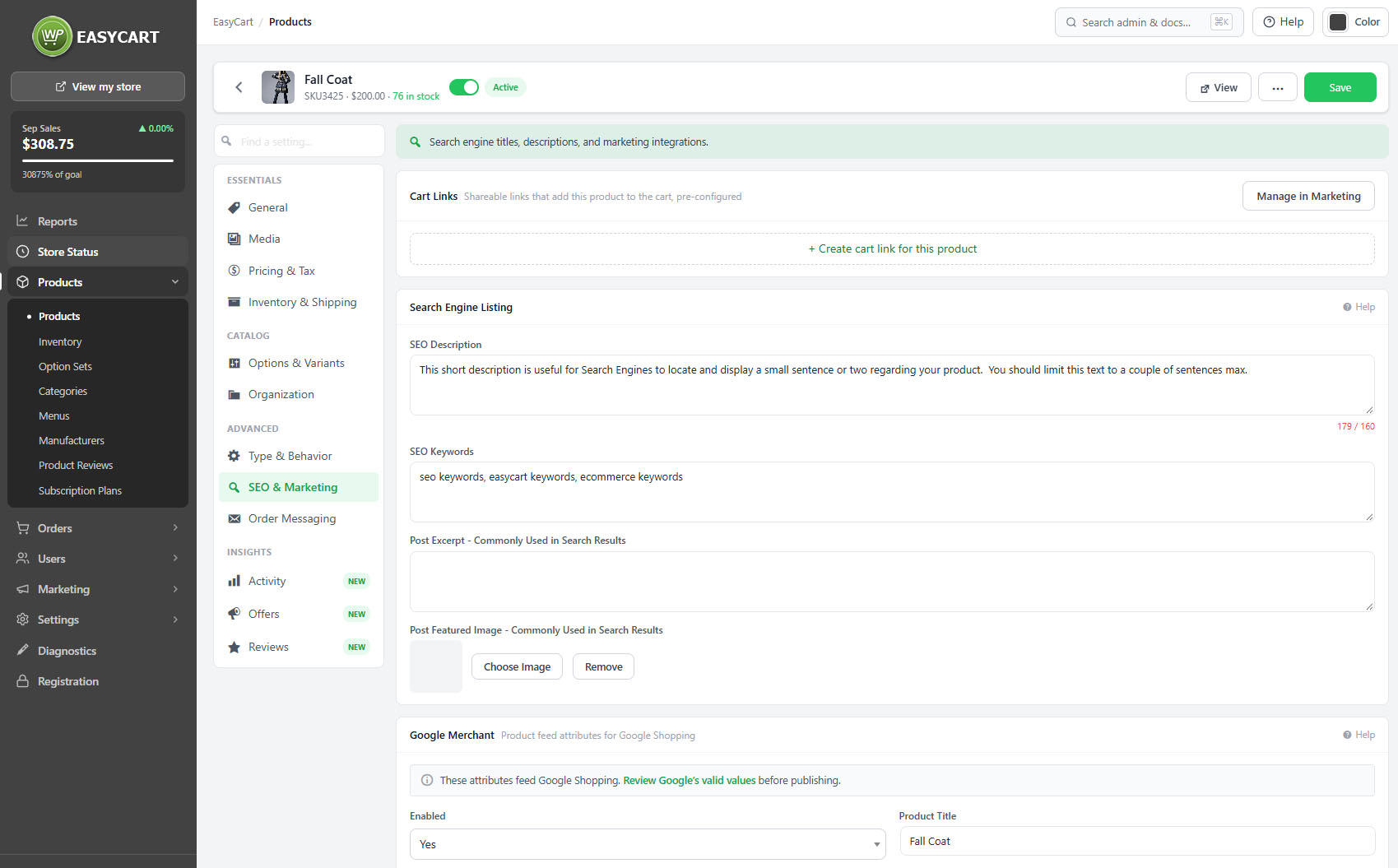
The product editor, SEO and Marketing tab, showing the search result preview and Yoast fields.

⚠️ Careful: Changing the slug on an established product changes an address search engines have indexed and customers have saved. Lock the slug once a product is live so it stops following title edits.

Google Merchant and marketing

Feed attributes, mailing list groups and a QR code

no stored settings

Google Merchant feed attributes are set per product, which is what allows the product into Google Shopping. Feeds are strict about required attributes, and a product missing them is rejected rather than shown, so this is worth completing properly if you are feeding Shopping at all.

Buyers of a product can be added automatically to a mailing list group, which is how you build a segment of people who bought a particular thing without exporting and importing lists by hand.

A product QR code can be generated and downloaded as an image. It is genuinely useful in a physical setting: on a shelf label, a market stall sign, a catalogue or packaging, sending somebody straight to the product page rather than to your home page.

💡 Note: The Google Merchant connection itself is configured under Google Merchant. These fields supply the per-product attributes the feed needs.

Keep going

Related panels

General Details

The title the slug and SEO title are built from.

Google Merchant

Google Merchant, for sending the catalogue to Google.

Categories

Category SEO, which works the same way.

Manufacturers

Brand pages and their SEO.

Media

Images, which carry their own alt text.

Products

How product links are built across the store.

Try the PRO features free for 14 days

Anything marked PRO comes with WP EasyCart PRO or Premium. Take the whole thing for a run on your own store before you decide.

Updated on September 18, 2026